- Should a Mineral Processing Site Have a Mechanic or Welder Permanently Employed?
- The Question
- The Answer
- Explanation
- 1. The False Economy of Outsourced Maintenance
- 2. What "Skilled" Actually Means: Multi-Disciplinary Competence
- 3. Quality of Outsourced Work in East Africa Is Demonstrably Inadequate
- 4. The On-Site Operator as Cost-Saver, Not Cost Centre
- 5. Daily Maintenance Is Not Optional — It Requires Daily Presence
- 6. Equipment Financing Agreements Require Proper Maintenance
- Conclusion
- References
Should a Mineral Processing Site Have a Mechanic or Welder Permanently Employed?
The Question
Should a mineral processing site maintain a mechanic or welder as a permanent, on-site employee, or can these services be sourced externally on an as-needed basis?
The Answer
A mineral processing site must always have such a person permanently employed — not merely as a mechanic or welder called in from outside, but as a machine operator who possesses practical, multi-disciplinary skills in plumbing, electricity, and the fundamentals of mechanics. This includes competence in greasing, oil changes, pulley alignment, belt tensioning and replacement, and the routine replacement of wear parts on jaw crushers and rock impact mills. In East Africa, the cost of calling outsourced providers for these seemingly basic tasks is substantially higher than retaining a skilled operator on staff, and the quality of externally sourced work is frequently unreliable.
Explanation
1. The False Economy of Outsourced Maintenance
In East African mineral processing contexts, the temptation to call an external welder or mechanic when a belt snaps or a hammer wears out may appear cost-effective on paper — no monthly salary, no accommodation, no ongoing obligation. In practice, this approach is ruinously expensive. The reference materials document that locally made hammer crushers in Uganda incur maintenance expenses of 3,500,000 Ugandan shillings per month alone, with hammers that must be “constantly replaced” and machines that “once running cannot be easily turned off” [11]. These are not one-off repair costs — they are recurring, structural drains on operating capital that a permanently employed, skilled operator could drastically reduce through proper preventive maintenance and competent, timely intervention.
2. What “Skilled” Actually Means: Multi-Disciplinary Competence
The question is often framed too narrowly as “welder” or “mechanic.” The mineral processing site requires a person who can, in a single day, attend to all of the following:
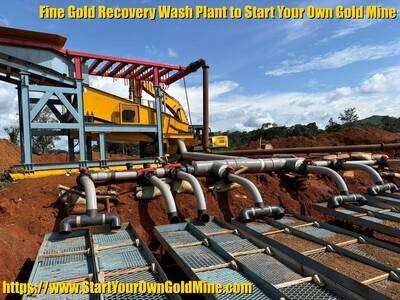
- Plumbing: Water supply lines to shaker tables, ball mills, and wash plants must remain uninterrupted; a leaking seal or blocked line halts gold recovery.
- Electricity: Diesel generators, pump circuits, and lighting systems require basic electrical troubleshooting that no external electrician can be summoned for at short notice from a distant town.
- Mechanical fundamentals: Greasing bearings, checking oil levels in engines and gearboxes, tensioning drive belts, aligning pulleys — all tasks that, if neglected, precipitate catastrophic equipment failure.
- Wear part replacement: Jaw crusher toggle plates, impact mill hammers and chains, ball mill liners, and screen meshes are consumed continuously by abrasive ore. The reference materials explicitly list “replacing hammers, belts, and bearings” as core maintenance responsibilities that must be “budgeted separately to avoid downtime” [2].
An outsourced provider cannot be on site at 6:00 AM to grease the jaw crusher before the day’s run, nor can they tension a slipping belt at 2:00 PM when production is underway. These are operator-level tasks that require immediate, on-site presence.
3. Quality of Outsourced Work in East Africa Is Demonstrably Inadequate
The reference materials are explicit and damning on this point. In the Geita region of Tanzania — one of East Africa’s most active gold mining areas — Epsom Ltd. is singled out as the one workshop that “can deliver good works that no average welder can in the area” [7][10]. The implication is clear: the average welder cannot deliver adequate quality. Furthermore, the materials note that “local welders cannot bend the metal properly” when constructing impact mill components [1], and that locally fabricated crushers — welded by those same local welders — produce poorly milled material while consuming excessive maintenance budgets [11].
The reference materials also document that over 95% of mining license holders in East Africa fail to comply with regulations, with the primary reason being “their lack of skilled personnel, instead hiring unqualified third parties” [5][9]. When an operation outsources its mechanical and welding work to unqualified local providers, it not only incurs higher costs but also risks regulatory non-compliance and outright operational failure.
4. The On-Site Operator as Cost-Saver, Not Cost Centre
A permanently employed machine operator with the skills described above is not an overhead — it is a direct cost-reduction mechanism. Consider the comparative economics:
| Cost Factor | Outsourced Provider | Permanent Skilled Operator |
|---|---|---|
| Downtime per failure | Hours to days (travel, diagnosis, sourcing materials) | Minutes to hours (immediate response) |
| Quality risk | High — “no average welder can” do the work [7][10] | Controlled — trained on specific site equipment |
| Recurring maintenance cost | 3,500,000 UGX/month on poorly maintained local crushers [11] | Fraction of that through preventive care |
| Equipment lifespan | Shortened by neglect between visits | Extended through daily greasing, tensioning, inspection |
| Loss of production | Full stoppage until external provider arrives | Minimal — operator maintains as part of daily routine |
The locally fabricated hammer crusher cited in the reference materials costs over US $4,000 to purchase and then 3,500,000 UGX per month to maintain — yet “the money could be well spent on a better and professional crusher with more capacity and durability and less maintenance expenses” [11]. The same logic applies to personnel: money spent on outsourced, low-quality repairs would be far better invested in a permanent, multi-skilled operator who prevents those repairs from being needed in the first place.
5. Daily Maintenance Is Not Optional — It Requires Daily Presence
The reference materials emphasise that SYOGM clients are “responsible for ongoing maintenance and wear parts” and that “operating expenses like fuel, staff salaries, and maintenance (e.g., replacing hammers, belts, and bearings) must be budgeted separately to avoid downtime” [2]. A detailed maintenance table is provided for each machine, reinforcing that maintenance is a continuous, not episodic, requirement.
No outsourced provider can perform the following essential daily and weekly tasks:
- Daily greasing of jaw crusher bearings and toggle mechanism
- Daily inspection and tensioning of drive belts on impact mills
- Daily oil level checks on diesel engines
- Weekly replacement of worn impact mill hammers and chains
- Weekly inspection of ball mill liners and screen meshes
- Ongoing monitoring of water pump seals and plumbing integrity
These are the tasks that determine whether equipment runs for years or fails in months. They demand a person who is physically present every working day.
6. Equipment Financing Agreements Require Proper Maintenance
The reference materials further note that where equipment is provided under financing arrangements, “any expenses in maintenance of machines or equipment, or its energy have to be calculated by standard accounting rules as expenses” [12]. Equipment subjected to neglect and outsourced, low-quality repairs will generate higher maintenance expenses, erode profitability, and potentially breach the conditions under which the equipment was provided. A permanent, skilled operator protects the operator’s investment and the financier’s asset simultaneously.
Conclusion
A mineral processing site in East Africa must always permanently employ a machine operator who possesses practical, hands-on skills in plumbing, basic electricity, and mechanical fundamentals — including greasing, oil management, pulley and belt work, and the routine replacement of wear parts on jaw crushers and rock impact mills. The alternative — calling outsourced providers — is demonstrably more expensive in both direct cost and lost production, and the quality of externally sourced welding and mechanical work in the region is frequently inadequate for the demands of continuous mineral processing [1][7][10][11]. The operator is not merely a convenience; they are the single most effective safeguard against the cascade of costly failures that define under-maintained processing sites.
References
- Impact chain flail rock mill construction and local welder limitations [1]
- What Every SYOGM Client Must Know About Maintenance & Wear Parts [2]
- Mining License Compliance in East Africa — 95% failure due to unskilled personnel [5]
- Epsom Ltd. metal workshop — quality beyond average welders [7]
- Skilled technicians and Epsom Ltd. capabilities [10]
- Local crusher maintenance costs — US $4,000 purchase, 3,500,000 UGX/month maintenance [11]
- Maintenance expenses under equipment financing agreements [12]
- License holders hiring unqualified third parties [9]
 Telegram at username
@rcdrun
Telegram at username
@rcdrun WhatsApp Business