Four Technologies Drive Incremental Sluice Design for Enhanced Fine Gold Recovery
Operators manage the sluice to recover fine gold. We employ four essential technologies to capture small particles. The testing phase permits many errors, enabling subsequent sluice designs to incorporate incremental improvements for enhanced gold recovery.
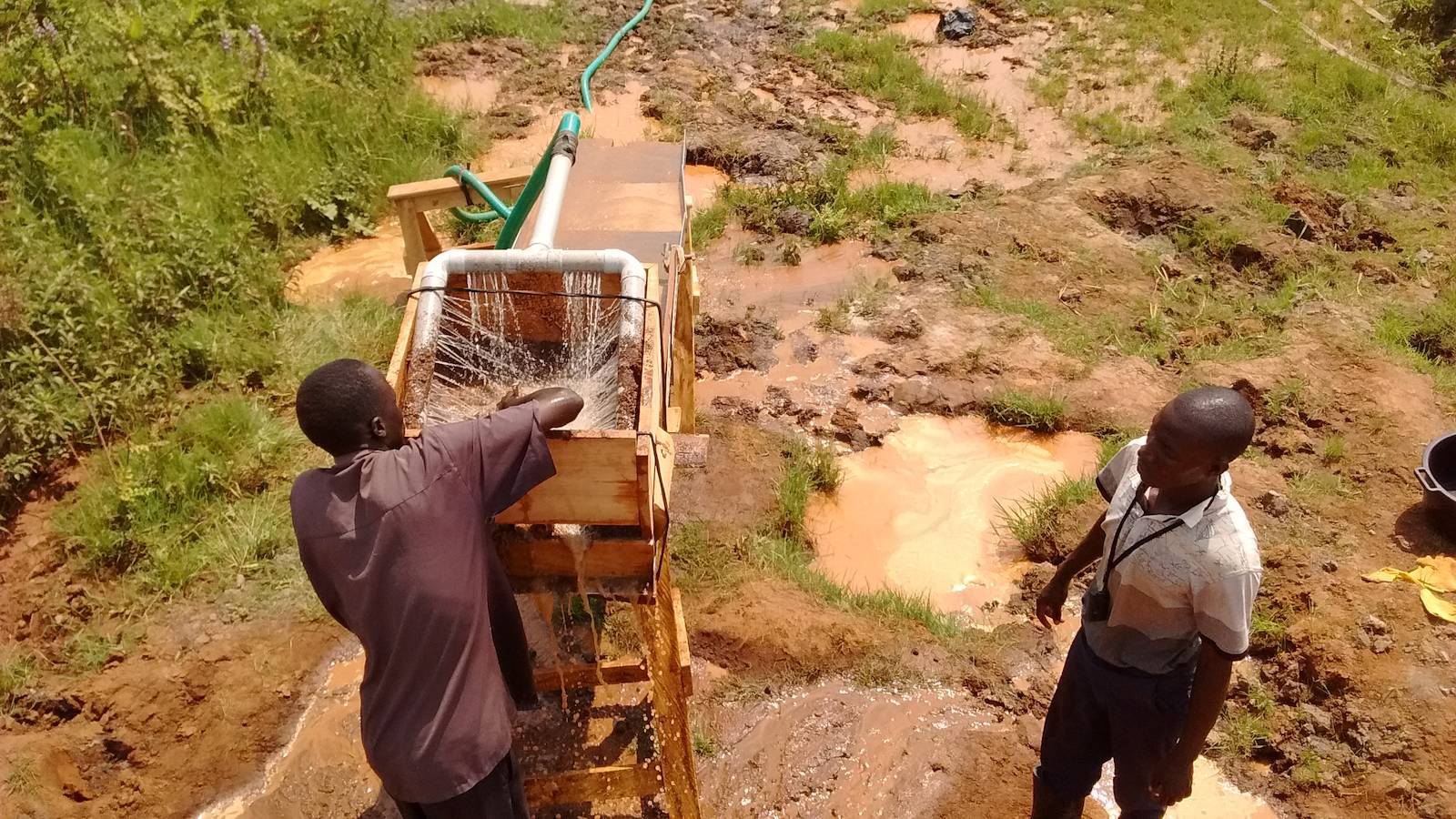
Gold‑Recovery Sluice Factors – A Quick Overview
Riffle Geometry & Pattern
Riffles are the key to trapping gold. Their width, depth, and spacing determine how much water is retained and how long particles stay in contact with the riffle surface. Narrow, shallow riffles with tight spacing give fine particles more surface area to settle on, boosting recovery of sub‑millimetre gold.
Water Flow Rate & Distribution
The amount and uniformity of water flowing over the sluice control the “thickness” of the water film. Too much flow washes fine gold away; too little creates a stagnant film that can clog the riffles. Adjustable flow panels or variable‑speed pumps let operators fine‑tune the velocity for optimum capture.
Agitation/Vibration Mechanisms
Gentle agitation (via paddle wheels, oscillating plates, or low‑frequency vibration) keeps the water film from becoming too still while still allowing heavy gold to settle. It also prevents fine particles from becoming trapped in the riffle crevices, ensuring they’re transported to the tailings.
Particle Separation Media & Tailings Management
The type of tailings (e.g., gravel, sand, or fine tailings) and the downstream handling (e.g., secondary sluice, trommel, or flotation) affect how much gold is ultimately recovered. Using a secondary sluice or a fine‑mesh screen can capture gold that escaped the first pass.
Why Incremental Design Matters
During the testing phase, operators can experiment with each of these variables—changing riffle spacing, adjusting flow rates, adding or removing agitation, and modifying tailings screens. Because many parameters can be tweaked without redesigning the whole system, errors become learning opportunities. Each iteration incorporates the lessons learned, gradually refining the sluice into a highly efficient fine‑gold recovery machine.


 Telegram at username
@rcdrun
Telegram at username
@rcdrun WhatsApp Business