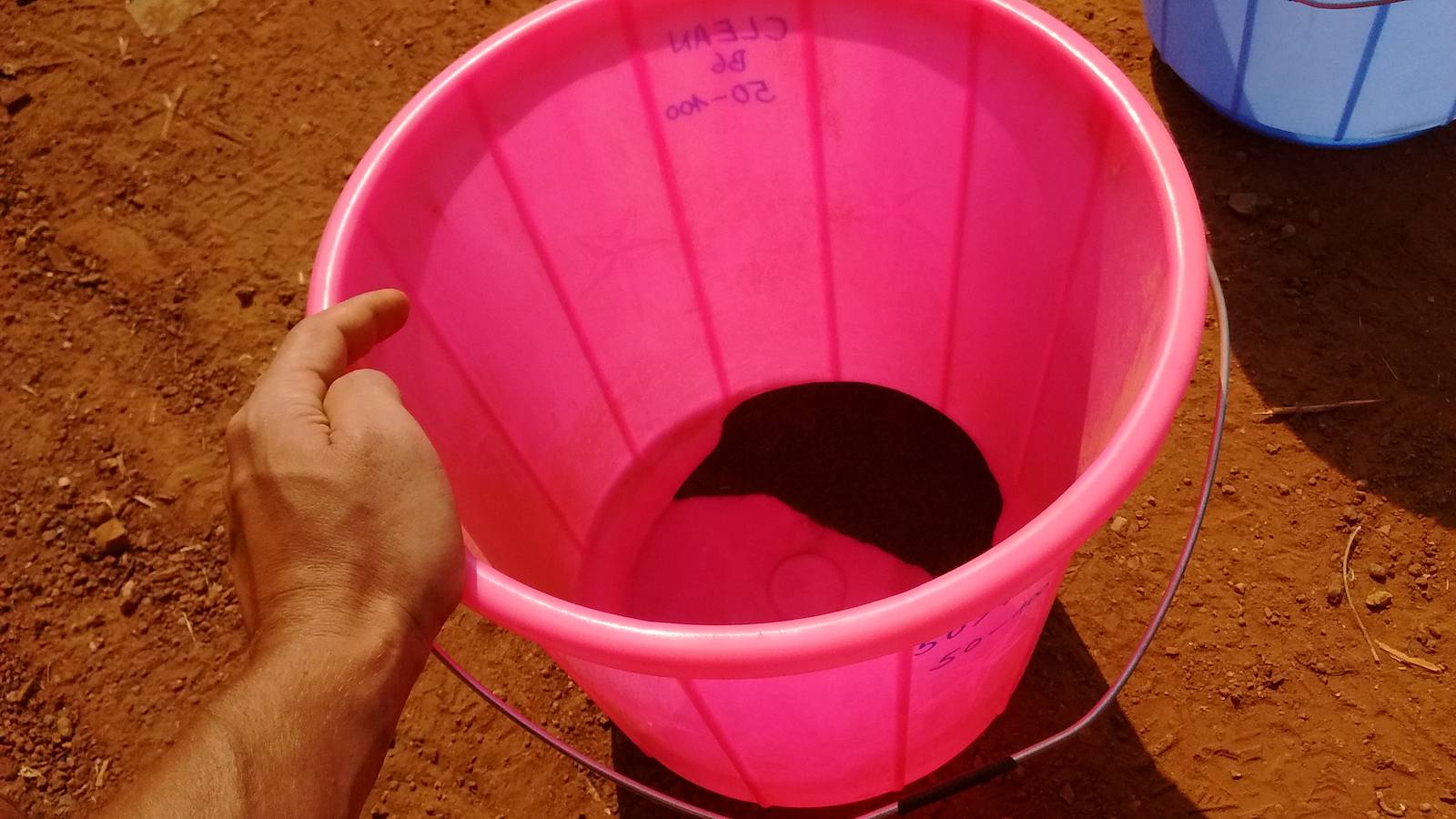
Black sand after classification
Black sand has been classified and is now in the bucket.
Why Classifying Black‑Sand Concentrates Matters for Gold Recovery
| Step | What Happens | Why It Helps Gold Recovery |
|---|---|---|
| 1. Size & Density Separation | The black‑sand mixture is passed through a series of screens or classifiers (e.g., shaking tables, spirals, hydro‑classifiers). | Gold particles are typically denser (19–20 g/cm³) than the surrounding heavy minerals (magnetite, ilmenite, zircon, etc.). By separating the material into size fractions, you can concentrate the gold‑bearing fraction where the density contrast is greatest. |
| 2. Removal of “Light” Gangue | Fine, low‑density particles (clays, organic matter, some quartz) are washed away or floated off. | These unwanted materials can shield gold from downstream concentration steps and increase the volume of material that must be processed, raising cost and time. |
| 3. Enrichment of Heavy Minerals | After classification, the remaining concentrate is dominated by heavy minerals, including the bulk of the gold. | The grade (gold content per ton) of the concentrate is dramatically higher, meaning you have far less material to treat in the final recovery stage. |
| 4. Optimizing Down‑stream Equipment | A well‑classified concentrate can be fed directly to sluice boxes, jigs, shaking tables, or centrifuges that are tuned to the expected particle size and density. | These machines operate most efficiently when fed a uniform, dense feed; otherwise they become clogged, lose recovery, or require excessive water and maintenance. |
| 5. Reducing Energy & Chemical Use | Less material to process means lower pump power, less water, and fewer reagents (e.g., cyanide, if used). | Lower operating costs and a smaller environmental footprint. |
Bottom Line
Classifying black sand concentrates the gold into a smaller, denser, and higher‑grade fraction. This makes every subsequent recovery step faster, cheaper, and more effective.
Why “Black Sand Has Been Classified and Is Now in the Bucket”
Physical Reality – After the classification stage, the material that remains (the heavy‑mineral concentrate) is collected in a bucket or hopper. This is the output of the classifier, ready for the next recovery phase.
Process Milestone – In many placer mining or dredging operations, the classification step is the point at which the operator can visually confirm that the heavy fraction is isolated. Seeing the material in a bucket is a clear, tangible indicator that the separation has worked.
Operational Efficiency – By moving the classified concentrate into a bucket, you can:
- Meter it to downstream equipment at a controlled rate.
- Store a short‑term sample for assay or quality‑control checks.
- Facilitate manual handling (e.g., feeding a sluice box with a scoop).
Safety & Environmental Management – Keeping the concentrate in a confined bucket prevents:
- Uncontrolled spillage of fine particles that could smother aquatic life.
- The loss of valuable gold that might otherwise be left behind in the tailings.
Psychological / Documentation Value – Operators often take photos or record “bucket‑level” readings to log progress. It serves as a record that the classification stage was completed and that the feedstock for gold recovery is now in a known, manageable state.
Putting It All Together
- Classification creates a high‑grade, dense concentrate by exploiting the size‑density relationship between gold and the surrounding black sand.
- This concentrate is physically collected in a bucket once the separation is successful.
- The bucket is not just a container; it is the gateway to the final gold‑recovery steps, ensuring that the material fed into those steps is as concentrated and uniform as possible.
In short, classifying black sand is a critical preprocessing step that maximizes gold recovery efficiency, reduces costs, and protects the environment—while the bucket represents the practical, tangible result of that classification.

 Telegram at username
@rcdrun
Telegram at username
@rcdrun WhatsApp Business